Eliminate and prevent the pain at the back of your knee by following these simple tips!
Patient Presentation: History, Background, and Complaints
Coco C. presented to my office looking blue and when asked replied, "You would be sad too if 100's of you friends were constantly trying to half-wheel you." It soon became clear that the real reason, the one she was attempting to deny, was the bothersome discomfort behind her knee.
Ms. Cadence reported that she has always prided herself on the ability to pedal pleasant circles, but recently feels that she is reaching with her foot and constantly sliding to the nose of her saddle.
Physical Examination
An assessment of Ms. Cadence's strength showed that her quads were much stronger than her hamstrings, causing a muscle imbalance and the tendency for her quad muscles to overpower her hamstrings, leaving them overworked. Most notable, however, was the lack of flexibility in her hamstrings, glutes, and calf muscles. Ms. Cadence also appeared to have swelling behind her knee and it was tender to the touch.
Diagnosis: What is it Called?
Hamstring Strain or Biceps Femoris Tendonitis
An irritation (inflammation) of the hamstring tendon where it attaches at the back of the knee, causing tenderness and swelling at the back of your knee which develops and worsens over time.
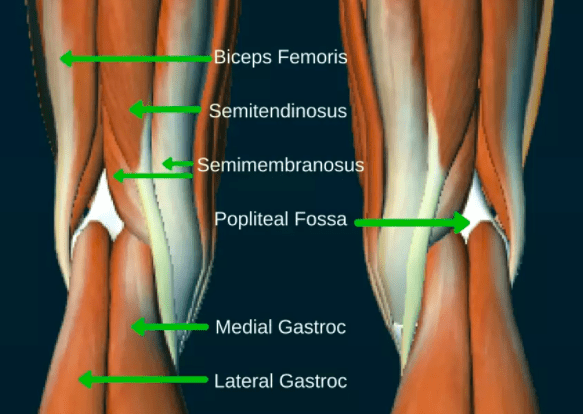
Calf Strain or Gastrocnemius Tendinitis
An inflammation of the calf muscle tendon at the back of the knee producing pain of a gradual onset behind the knee, which can make going up on your tiptoes with your legs straight difficult or painful.
Baker's Cyst or Popliteal Cyst
Swelling that occurs at the back of the knee, often about the size of a golf ball but can vary over time, causing pressure and difficulty bending the knee.
Etiology: What Causes It?
Overuse
Irritation due to the repetitive nature of the pedal stroke if performed improperly or if problematic, especially if improper positioning causes excessive straightening of the knee.
Muscle Imbalance or Weakness
Stiffness or shortening of the hamstrings, calf muscles, and glutes due to prolonged repetitive exercise while improperly positioned or if you have a congenital musculoskeletal predisposition. Or quads that are stronger than your hamstrings, which overpower them while pedaling causing overload.
Core Weakness
Without strong back and abdominal muscles there is no foundation for strength production by the legs and an inconsistent and improper pedal stroke can result.
Injury
The residual effects of prior trauma or recent injury can cause significant and limiting knee pain.
Bike Fit
Improper positioning on the bike causes repetitive stress-causing inflammation and pain in the affected area.
Treatment: What Can You Do About It?
- If the pain is the result of a recent injury or is acute (sudden onset within ~24 hours) with swelling, control the symptoms by following the 'PRICE principle' (an acronym which stands for Protect, Rest, Ice, Compression and Elevation) immediately for the next 2 to 3 days.
- Check your bike fit: Pain at the back of the knee occurs when there is overextension at the knee joint, most often caused by a saddle which is too high or too far back or improper crank length.
- Focus upon a comfortable cadence and smooth pedal stroke.
- Follow a consistent and effective recovery strategy.
- Avoid 'Spring Knee', the pain and discomfort caused by a sudden increase in mileage and/or intensity in an attempt to make rapid fitness gains, by following a sound progressive training plan.

- Address muscle imbalances through a focused strengthening and stretching plan, making sure to only perform exercises which can be done pain free and without residual soreness.

Find The Zom Posterior Knee Pain Program complete with exercise descriptions here
Referral: When is it Time to Ask For Help?
- A proper bike fit performed by a certified professional is always a good idea, especially when the small incremental changes you have made to your setup don't provide the results or eliminate the pain you are experiencing.
- A progressive periodized training and recovery plan is essential and when followed with the aid of a knowledgeable cycling coach there is a tendency to be more accountable and disciplined.
- If your knee pain is persistent, worsens, or significantly interferes with your cycling, seek the assistance of a Sports Medicine Physician or Physical Therapist for an expert biomechanical and musculoskeletal assessment and treatment.

The Expected Outcome: Conclusion
Pain felt at the back of a cyclist's knee is frequently the result of improper bike fit and muscle tightness or imbalance. Once identified, take some recovery time to allow the inflammation to decrease while addressing the potential underlying causes of the issue.
Initiate a program of gentle stretching and progressive strengthening in a pain free manner when able. You will be pedaling perfect painfree circles with C. Cadence in no time!
Next appointment
In the next instalment in this series, learn what may be causing the pain in your hip and what you can do to keep riding without performance limiting discomfort.
What about you?
Have you suffered from pain in the back of your knee? If yes, let your fellow virtual cyclists know what worked best for you.
To subscribe to the Zommunique and receive more informative and entertaining articles like this one sent directly to your inbox, click here!


No comments:
Post a Comment